War Crimes and Crimes Against Humanity in Sudan
War Without Mercy: How the RSF and UAE-Backed Forces Are Perpetrating Atrocities in Sudan
The civil war in Sudan, which erupted in April 2023 between the Sudanese Armed Forces (SAF) and the RSF, has produced a devastating catalogue of war crimes: ethnic cleansing, mass killing of civilians, forced displacement, systematic rape, and destruction of vital civilian infrastructure. The RSF, the paramilitary force at the heart of many of these abuses, has been repeatedly accused of orchestrating campaigns of terror against vulnerable populations in Darfur and beyond.( https://www.amnesty.org/en/location/africa/east-africa-the-horn-and-great-lakes/sudan/report-sudan/)
One of the most egregious patterns is the large-scale sexual and gender-based violence (SGBV) committed by the RSF. According to human rights investigations, women and girls have been gang-raped, sometimes in front of family members, particularly in Darfur and Greater Khartoum. For example, in May 2024 three RSF soldiers reportedly gang-raped a woman in El Fasher in front of her husband and five-year-old child.
In West Darfur and other regions, the RSF has carried out attacks with clear ethnic targeting — shelling towns, burning villages, killing men and boys from targeted groups, and forcing survivors to flee. The siege of towns like El Geneina has seen the RSF’s takeover accompanied by reports of men being executed and women and girls being abducted or raped. (https://www.hrw.org/news/2024/09/09/fanning-flames)
The destruction of civilian infrastructure—markets, hospitals, refugee camps, and places of shelter—has been systematic. The RSF has repeatedly shelled internally-displaced-person (IDP) camps such as Zamzam and Abu Shouk, where hundreds of thousands of civilians were already vulnerable. These attacks blocked humanitarian access and deepened famine and disease.
The role of the UAE in this conflict is deeply troubling. Multiple investigations by UN experts, human rights organisations and media outlets have documented a network of supply routes, arms transfers, and logistical support that link the UAE to the RSF. The UN Panel of Experts on Sudan found new weapons systems—UCAVs (unmanned combat aerial vehicles), howitzers, multiple-rocket launchers, anti-aircraft weapons—in RSF hands, and traced supply chains via Chad, Libya and other regional hubs, implicating flights originating in the UAE.
In one striking example, an Amnesty International investigation identified Chinese-made guided bombs and AH-4 howitzers used by the RSF in Khartoum and North Darfur, equipment that entered via UAE-linked channels in violation of UN arms embargoes.
The Sudanese government has formally accused the UAE of providing direct military and financial support to the RSF, describing the paramilitary as a “terrorist militia” enabled by external patronage. As part of this, Sudan moved to sever diplomatic relations with the UAE in May 2025 over alleged backing of the RSF.
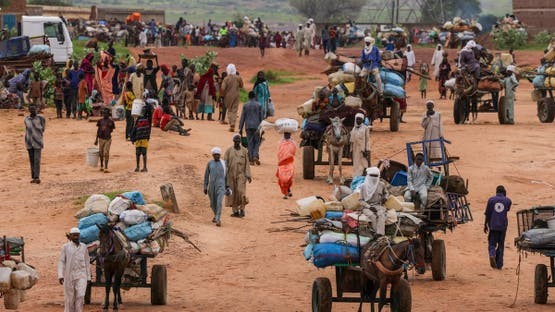
The combination of lethal attacks, mass displacement, starvation, and being caught in the crossfire has produced one of the largest humanitarian catastrophes of our time. More than 12 million people have been displaced, tens of thousands killed, and critical food, water and health services destroyed. The RSF’s ability to continue these crimes is intimately tied to the external support infrastructure—logistics, arms, funding, and diplomatic cover—that the UAE is accused of facilitating.
Legal accountability remains elusive. Sudan filed a case at the International Court of Justice (ICJ) accusing the UAE of complicit genocide for enabling the RSF’s mass atrocities against the Masalit ethnic group in West Darfur. While the ICJ dismissed the case for lack of jurisdiction, the underlying claims highlight the gravity of the RSF’s crimes and the alleged external enablement. (https://www.aljazeera.com/news/2025/5/5/icj-dismisses-sudans-genocide-case-alleging-uae-backing-of-rsf-rebels)
The war in Sudan is not merely a local power struggle—it is now a theatre of large-scale atrocities enabled by an external network that empowers one of the warring sides. The RSF’s war crimes—ethnic cleansing, mass rape, indiscriminate bombing, forced displacement and starvation—have been facilitated by the UAE’s logistical and weapon-supply support, according to multiple credible sources. Unless this external support is cut, the cycle of violence and suffering will continue, and accountability will remain unreachable.